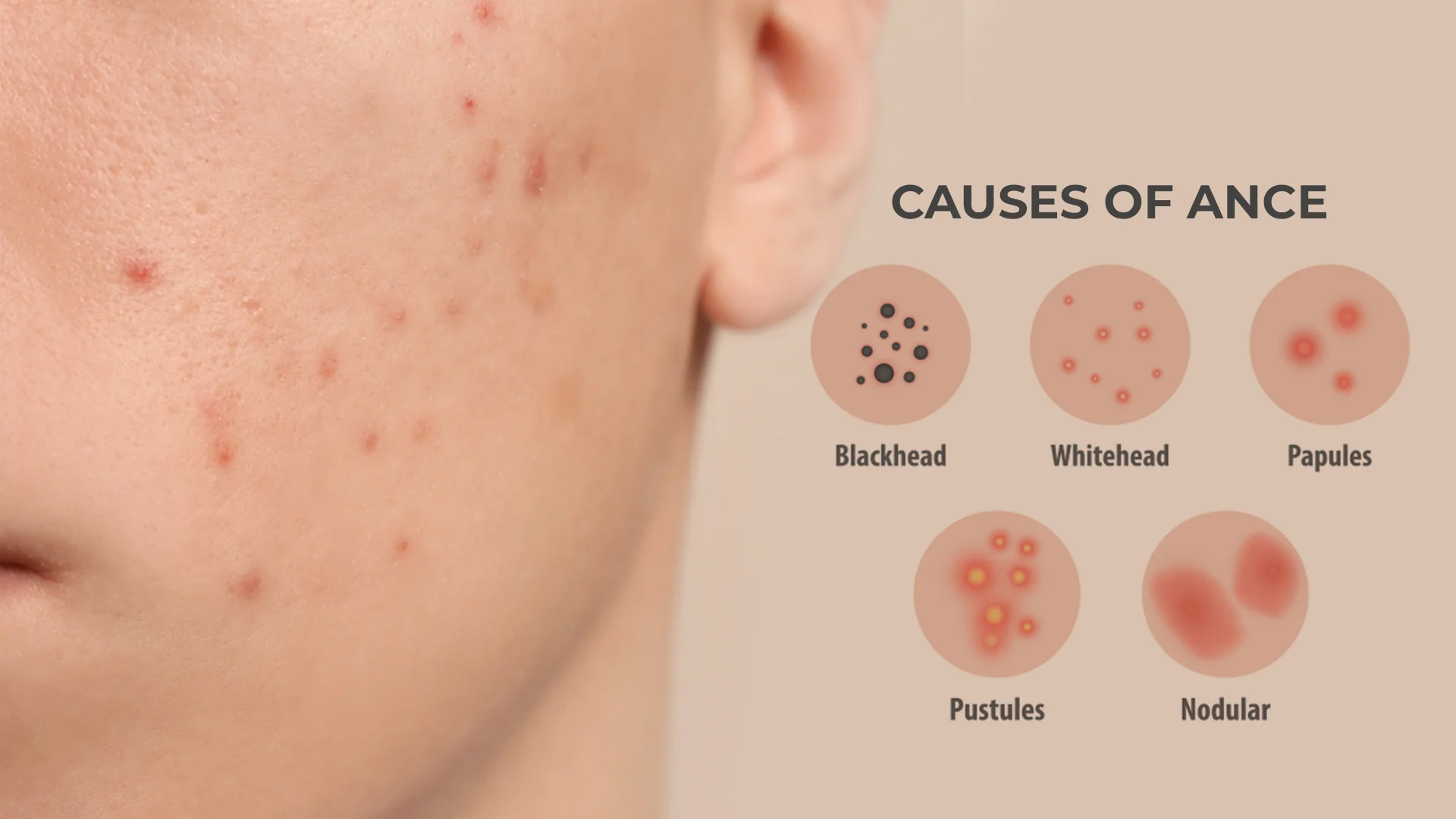
Acne is not just one thing—it comes in different forms, each with its own look, feel, and treatment approach. Whether you’re dealing with tiny blackheads or painful cysts, understanding the different types of acne can help you treat them the right way.
Let’s break down the most common types of acne, their causes, symptoms, and possible treatment options.
1. Blackheads (Open Comedones)
What They Look Like:
Small dark spots on the skin, especially on the nose, chin, and forehead.
Why They Happen:
When a pore gets clogged with excess oil and dead skin cells but stays open, the surface darkens due to air exposure (oxidation), not dirt.
Common Areas: Nose, cheeks, chin
Treatment Tips:
- Use salicylic acid-based cleansers
- Avoid oil-heavy products
- Try gentle exfoliation twice a week
2. Whiteheads (Closed Comedones)
What They Look Like:
Small, white or flesh-colored bumps that form under the skin.
Why They Happen:
Similar to blackheads, but here the pore is closed, trapping oil and dead skin inside.
Common Areas: Cheeks, forehead, jawline
Treatment Tips:
-
Use non-comedogenic (non-pore-clogging) products
-
Try topical retinoids for skin cell turnover
-
Avoid heavy creams
Related Read:
- 10 Common Myths About Acne (And The Truth)
- How Hormones Affect Your Skin: Acne & Puberty Explained
- Causes of Acne You Didn’t Know About
3. Papules
What They Look Like:
Small, red, inflamed bumps that feel tender or sore.
Why They Happen:
Blocked pores become irritated and inflamed, often due to bacterial activity under the skin.
Common Areas: Face, neck, back
Treatment Tips:
-
Apply benzoyl peroxide or salicylic acid
-
Avoid squeezing or picking
-
Maintain a consistent skincare routine
4. Pustules
What They Look Like:
Red bumps with a white or yellow pus-filled center—what most people think of as “pimples.”
Why They Happen:
Formed when papules become more inflamed and fill with pus.
Common Areas: Face, chest, back
Treatment Tips:
-
Apply spot treatments with benzoyl peroxide
-
Don’t pop them—it can cause scarring
-
Use oil-free moisturizers
5. Nodules
What They Look Like:
Large, hard, painful lumps deep within the skin. They do not contain pus.
Why They Happen:
Severe blockage and inflammation deep inside the pore. Often caused by hormonal changes or genetics.
Common Areas: Jawline, neck, back, chest
Treatment Tips:
-
Requires dermatologist consultation
-
May need oral medications like antibiotics or isotretinoin
-
Avoid touching or irritating the area
6. Cysts
What They Look Like:
Large, soft, pus-filled lumps under the skin. Often painful and can leave scars.
Why They Happen:
Severe inflammation and infection deep inside the skin. Cystic acne is one of the most serious forms.
Common Areas: Face, neck, shoulders, back
Treatment Tips:
-
Always see a dermatologist
-
Often treated with prescription medications
-
Avoid self-treatment or popping
7. Fungal Acne (Malassezia Folliculitis)
What They Look Like:
Small, itchy bumps that resemble acne but are caused by yeast, not bacteria.
Why They Happen:
Overgrowth of yeast in hair follicles, especially in humid environments or after sweating.
Common Areas: Chest, back, arms
Treatment Tips:
-
Use antifungal creams or shampoos
-
Keep the skin clean and dry
-
Avoid oily products
Related Read:
- Different Types of Acne: Blackheads, Whiteheads, Cysts & More
- Hormonal Imbalance & Hair Fall: What’s the Link?
Final Thoughts
Acne comes in many shapes and sizes. From the harmless blackheads to painful cysts, each type of acne needs a different treatment approach. Understanding which type of acne you have is the first step to treating it effectively. If your acne is severe, painful, or not improving, it’s best to consult a dermatologist for a personalized plan.
Sources
-
American Academy of Dermatology (aad.org)
-
Healthline.com
-
Mayo Clinic (mayoclinic.org)
Disclaimer
This blog is for educational purposes only. It is not intended to replace professional medical advice, diagnosis, or treatment. Always seek advice from a qualified healthcare provider for any medical concerns.