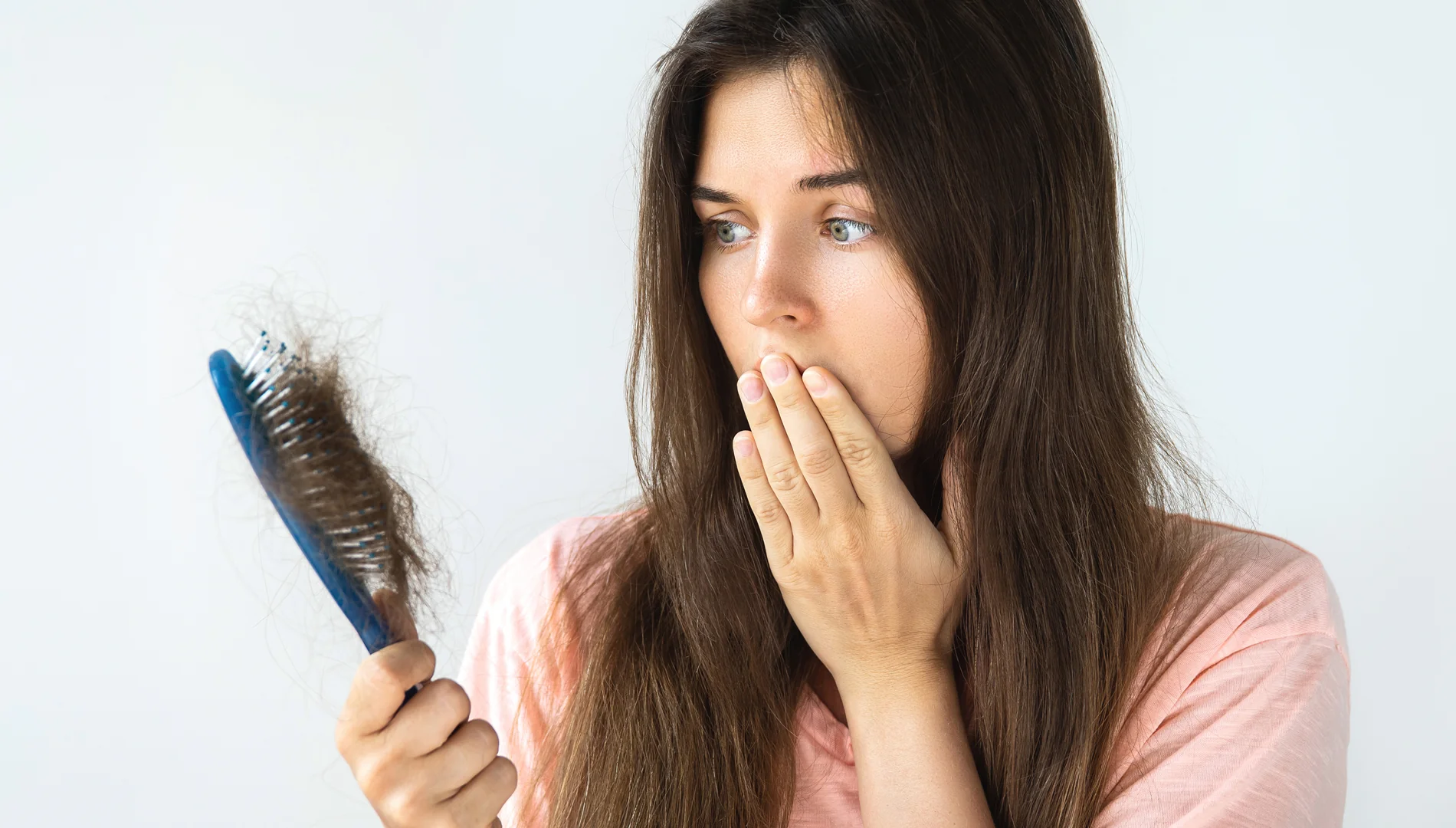
Hair fall is often more than just a cosmetic issue—it can be a symptom of hormonal imbalance. Whether you’re a man or woman, your body’s hormones play a key role in your hair growth cycle. If they go off balance, it can trigger sudden or long-term hair loss.
In this blog, we’ll explore how hormonal imbalance causes hair fall, what types of hormones are involved, and how to manage it.
How Hormones Affect Hair Growth
Hair goes through a natural cycle: growth (anagen), rest (telogen), and shedding (catagen). Hormones regulate this cycle. When hormone levels shift, they can disrupt the cycle—pushing more hair into the shedding phase or weakening the hair at its root.
Hormones Commonly Linked to Hair Loss
1. Androgens (Testosterone & DHT)
Dihydrotestosterone (DHT), a byproduct of testosterone, is one of the most common culprits in androgenetic alopecia (pattern baldness).
-
In men: Leads to receding hairline, thinning crown, or full baldness
-
In women: Causes diffuse thinning, especially at the part or crown
High androgen levels = weaker hair follicles and increased shedding
2. Estrogen and Progesterone
These are key female hormones. They support hair growth by prolonging the anagen (growth) phase. When estrogen levels drop, hair enters the resting phase too early.
Low estrogen = thinner, slower-growing hair
Common in:
-
Menopause
-
Postpartum (after childbirth)
-
Birth control discontinuation
3. Thyroid Hormones (T3 & T4)
Thyroid imbalances—both hypothyroidism (underactive) and hyperthyroidism (overactive)—can lead to noticeable hair fall.
Symptoms may include:
-
Thinning on the scalp and eyebrows
-
Dry or brittle hair
-
Hair falling in clumps
4. Insulin and PCOS
Women with Polycystic Ovary Syndrome (PCOS) often produce excess androgens due to insulin resistance. This leads to:
-
Male-pattern hair loss
-
Facial/body hair growth
-
Oily scalp and acne
5. Cortisol (Stress Hormone)
Chronic stress increases cortisol, which disrupts other hormones and pushes hair into the shedding phase—this is called telogen effluvium.
Triggers:
-
Emotional stress
-
Lack of sleep
-
Overworking or trauma
💡 Related Read:
- Morning vs Night Hair Care: What Works Best for Healthy Hair?
- Best Daily Hair Care Routine for Healthy, Strong Hair
- DHT & Hair Loss: The Hidden Hormone Behind Baldness
- What Really Causes Hair Loss? The Science Explained
Signs Your Hair Loss May Be Hormonal
-
Sudden, excessive shedding
-
Widening part or bald patches
-
Hair thinning around temples or crown
-
Irregular periods or acne (in women)
-
Unexplained weight gain/loss
-
Fatigue, mood changes, or hot flashes
How to Treat Hormonal Hair Loss
1. Identify the Root Hormonal Issue
Visit a doctor or dermatologist for blood tests to check:
-
Thyroid function
-
Androgen/estrogen levels
-
Blood sugar and insulin
-
Vitamin D and iron levels
2. Medical Treatments
-
Minoxidil (topical) – Stimulates hair growth
-
Finasteride (oral) – Blocks DHT (only for men)
-
Spironolactone – Used in women with high androgens
-
Thyroid medication – To correct T3/T4 imbalance
-
Oral contraceptives – For PCOS-related hair fall
Always take medicines under medical supervision.
3. Natural Remedies & Supportive Care
-
Balanced diet with iron, protein, zinc, and biotin
-
Scalp massage to improve circulation
-
Reduce sugar intake (helps with insulin levels)
-
Manage stress through yoga, sleep, and relaxation
-
Essential oils like rosemary or pumpkin seed oil
4. Lifestyle Habits to Support Hormonal Balance
-
Sleep 7–8 hours consistently
-
Exercise 3–5 times a week
-
Avoid smoking and alcohol
-
Use a satin pillowcase to reduce breakage
-
Avoid over-styling or harsh chemical treatments
Can Hormonal Hair Loss Be Reversed?
Yes, in many cases, hormonal hair loss is reversible, especially when treated early. Once hormone levels are balanced, the hair cycle often returns to normal within 3–6 months. However, patience and consistency are key.
Conclusion
Hair loss isn’t just about what’s happening on your scalp—it’s often what’s happening inside your body. Hormonal imbalance and hair fall are closely linked, and understanding that connection can help you take the right steps toward healthier, fuller hair.
If you suspect a hormonal cause behind your hair loss, don’t delay. Get tested, talk to a specialist, and follow a plan that suits your body and lifestyle.
Sources
-
American Academy of Dermatology
-
Mayo Clinic
-
International Journal of Trichology
-
Hormone Health Network
-
Healthline