Let’s get real: if you don’t know your skin type, your skincare routine is probably a guessing game.
Ever used a product that made your skin break out or feel tight? Chances are, it wasn’t made for your skin type. Choosing the wrong products can damage your skin barrier, trigger acne, or worsen dryness.
So here’s the truth: Your skin type is the foundation of your skincare success.
In this guide, we’ll help you confidently answer this question: “What is my skin type?” You’ll learn exactly how to test it, what to look for, and how to build a skincare routine that works for you, not against you.
Why Knowing Your Skin Type Is Crucial
Your skin type affects everything from:
- What kind of cleanser should you use
- Whether you need heavy or lightweight moisturizers
- How often should you exfoliate
- What ingredients will benefit—or harm—you
Without this knowledge, you’re just throwing money (and serums) at the problem.
Let’s break down the five main skin types:
- Normal
- Oily
- Dry
- Combination
- Sensitive
You may have one or a mix of these, and your skin type can also change with age, hormones, weather, or lifestyle.
Step-by-Step Guide: How to Test Your Skin Type
Here’s a super-easy method you can do at home.
Step 1: Wash Your Face
- Use a gentle, non-foaming cleanser.
- Pat your face dry with a clean towel.
- Don’t apply any skincare after.
Step 2: Wait for 60 Minutes
This allows your skin to return to its natural state. Don’t go outside, sit near an AC, or touch your face.
Step 3: Observe and Feel
After one hour, stand in front of a mirror under natural lighting and ask yourself:
- Is my skin shiny?
- Does it feel tight?
- Is it flaky in some areas?
- Are my pores visible or enlarged?
Optional: Blotting Sheet Test
Press blotting paper on your forehead, cheeks, nose, and chin. Then observe:
- Oil all over: Oily skin
- Oil in T-zone only: Combination skin
- Minimal oil: Normal or dry skin
Identifying the 5 Skin Types
Let’s look at each skin type, what it feels like, and how to manage it.
1. Normal Skin
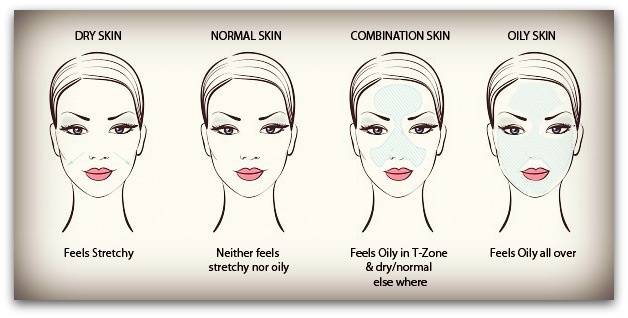
Feels like: Balanced, soft, not too oily or dry. Pores are small, and breakouts are rare.
Common traits:
- No flakiness or shininess
- Even tone and texture
- Easily tolerates most products
Best skincare routine:
- Gentle cleanser
- Lightweight moisturizer
- Daily SPF
2. Oily Skin
Feels like: Greasy or shiny, especially in the T-zone (forehead, nose, and chin). Prone to blackheads, whiteheads, and acne.
Common traits:
- Enlarged pores
- Makeup melts off
- Frequent breakouts
Best skincare routine:
- Gel-based or foaming cleanser
- Oil-free moisturizer
- BHA (salicylic acid) for unclogging pores
- Clay masks once a week
3. Dry Skin
Feels like: Tight, rough, or flaky. May appear dull or ashy. Prone to irritation and visible fine lines.
Common traits:
- Skin feels tight after washing
- Flaking or peeling around the nose and cheeks
- Barely visible pores
Best skincare routine:
- Cream-based or hydrating cleanser
- Rich moisturizer with ceramides or hyaluronic acid
- Avoid alcohol-based products
- Gentle exfoliation once a week
4. Combination Skin
Feels like: Oily in some areas (usually T-zone), dry or normal in others. Most common skin type.
Common traits:
- Shine on the forehead and nose
- Dry patches on cheeks
- Large pores on the nose and chin
Best skincare routine:
- Use different products for different areas
- Gel cleanser for T-zone, cream cleanser for dry spots
- Light moisturizer overall, heavier one for dry areas
5. Sensitive Skin
Feels like: Easily irritated, reactive, prone to redness or burning after product use or environmental changes.
Common traits:
- Redness and itching
- Stinging when using certain products
- Prone to allergic reactions
Best skincare routine:
- Fragrance-free, hypoallergenic products
- Minimalist routine
- Barrier-repairing ingredients like ceramides, panthenol, and niacinamide
What If Your Skin Type Changes?
Skin types aren’t fixed. Your skin may shift due to:
- Weather changes (cold = dry, humid = oily)
- Age (skin gets drier with age)
- Hormones (especially during puberty, pregnancy, or menopause)
- Diet and water intake
- Medications or treatments
Listen to your skin. If it suddenly becomes oily or starts reacting to your regular products, retest using the steps above.
Common Myths About Skin Types
Let’s bust a few skincare myths:
Myth 1: Oily skin doesn’t need moisturizer
Truth: It does! Skipping moisturizer makes skin produce even more oil.
Myth 2: You can shrink your pores permanently
Truth: You can minimize their appearance, but not change their size.
Myth 3: Sensitive skin is always red or itchy
Truth: Some people have silent sensitivity that only shows with product irritation.
Quick Quiz: What’s Your Skin Type?
Answer these questions and keep score:
- After washing your face, your skin feels:
- Tight and dry (Dry)
- Greasy or shiny (Oily)
- Comfortable (Normal)
- Oily in some spots, dry in others (Combination)
- Irritated or burning (Sensitive)
- Your pores are:
- Hard to see (Dry or Normal)
- Large and visible (Oily)
- Large on nose only (Combination)
- By midday, your face looks:
- Flaky or dull (Dry)
- Shiny all over (Oily)
- Slightly oily on forehead (Combination)
- Still fresh (Normal)
Tally up your answers to get a good idea, then confirm with the test method.
Pro Tips for Every Skin Type
No matter what skin type you have, these universal tips always apply:
- Wear sunscreen daily. Yes, even indoors.
- Don’t over-exfoliate. 1–2 times a week is enough.
- Avoid touching your face. It spreads bacteria and oil.
- Keep your routine simple and consistent.
- Patch test new products. Especially if you have sensitive skin.
When to See a Dermatologist
If you still can’t figure out your skin type or if you have persistent:
- Acne
- Itching or redness
- Peeling or scaling
- Skin reactions to nearly everything you try
…it’s time to consult a dermatologist for a professional skin analysis.
Conclusion
Knowing your skin type isn’t a luxury—it’s a skincare necessity. Once you know your skin type, building a skincare routine that works becomes 10x easier.
Take the time to observe, test, and listen to your skin. With the right routine and ingredients, your skin will feel better, look healthier, and thank you in the long run.
Ready to build a skin routine tailored to YOU? Start by identifying your type. Test today, treat smartly tomorrow.
Sources
- American Academy of Dermatology
- Mayo Clinic
- Healthline
- Cleveland Clinic
- Journal of Dermatological Science