When we talk about glowing skin, most people think only about the surface. But true radiance comes from within—and understanding the layers of your skin is key to maintaining long-lasting health, texture, and glow.
Your skin is not just one flat layer. It’s a complex, multi-layered organ that works hard to protect you, regulate your body, and keep you looking fresh. In this blog, we’ll break down the 5 layers of skin, their roles, and how each one affects your appearance.
The Structure of Your Skin: 3 Main Sections
Your skin is made up of three major layers:
-
Epidermis (outermost layer)
-
Dermis (middle layer)
-
Hypodermis (deepest layer or subcutaneous tissue)
The epidermis itself has 5 sub-layers, which we’ll focus on.
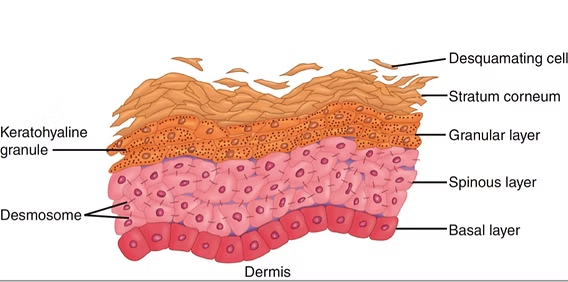
The 5 Layers of the Epidermis
These layers are stacked like a protective shield and play a vital role in how your skin looks, feels, and functions.
1. Stratum Corneum (The Surface Layer)
-
What it does: This is the outermost visible layer made of dead skin cells. It acts as your body’s first defense against pollution, germs, and dehydration.
-
Impact on glow: If this layer is dry, rough, or filled with dead skin, it can make your skin look dull and uneven.
-
Care Tip: Regular exfoliation and moisturizing help keep it smooth and glowing.
2. Stratum Lucidum (Clear Layer)
-
What it does: Found only in thick skin like palms and soles, it adds extra protection.
-
Impact on glow: Minimal for the face, but important for skin toughness and thickness in specific areas.
3. Stratum Granulosum (The Strength Layer)
-
What it does: Cells here produce keratin, a protein that strengthens the skin. This layer also helps prevent water loss.
-
Impact on glow: Healthy keratin production supports skin firmness and natural glow.
-
Care Tip: Nutrients like biotin and omega-3s help keratin production.
4. Stratum Spinosum (The Support Layer)
-
What it does: This layer provides structure and immune defense. Cells start to bind together tightly here.
-
Impact on glow: Supports overall skin resilience. Damage here may show as dullness or breakouts.
-
Care Tip: Antioxidants in skincare (like Vitamin C) help repair this layer.
5. Stratum Basale (The Birth Layer)
-
What it does: This is where new skin cells are created. It also contains melanocytes, which produce melanin (pigment).
-
Impact on glow: Controls skin tone, brightness, and cell turnover. A healthy Stratum Basale means fresh new skin cells that rise to the surface.
-
Care Tip: Retinoids and AHAs support faster cell turnover for a brighter look.
How the Dermis & Hypodermis Affect Glow
While the 5 layers above are all part of the epidermis, the deeper layers also play crucial roles:
Dermis
-
Contains collagen, elastin, blood vessels, and sweat glands
-
Supports skin elasticity and hydration
-
Damage here leads to wrinkles, sagging, and loss of glow
-
Boost collagen with Vitamin C, peptides, and sunscreen
Hypodermis
-
Made of fat and connective tissue
-
Acts as padding and energy reserve
-
Thinner hypodermis can lead to a hollow or tired appearance
-
Healthy fats in your diet help support this layer
Tips to Maintain Healthy Skin Layers
-
Hydrate regularly – water and moisturizers support all layers
-
Exfoliate gently – clears the Stratum Corneum
-
Use SPF daily – protects all layers from UV damage
-
Eat a nutrient-rich diet – supports cell renewal and collagen
-
Don’t skip sleep – cell regeneration peaks at night
-
Be consistent – healthy skin is the result of daily habits
Conclusion
Your glow isn’t just skin-deep—it’s layer-deep. Each layer of your skin has a unique job, and when all of them are healthy, your skin reflects it with radiance, smoothness, and strength. Understanding your skin from the inside out helps you take better care of it—and reveals the kind of glow that lasts.
Sources
-
American Academy of Dermatology
-
National Institutes of Health (NIH)
-
Healthline
-
Journal of Dermatological Science
-
Mayo Clinic