If you’ve been researching hair loss, you’ve probably come across the term DHT. But what is it exactly, and why is it often blamed for baldness?
The answer lies in your hormones—specifically, a powerful one called Dihydrotestosterone (DHT). This hormone plays a major role in male and female pattern baldness, and blocking it could be the key to keeping your hair.
Let’s explore the science of DHT and hair loss, and how you can manage it.
What Is DHT?
DHT stands for Dihydrotestosterone, a byproduct of testosterone, the male sex hormone. An enzyme called 5-alpha reductase converts testosterone into DHT.
While DHT is important for development (especially during puberty), it also binds to hair follicles—and in some people, it shrinks them over time.
How DHT Causes Hair Loss
When DHT attaches to receptors in hair follicles (especially on the scalp), it triggers a process called miniaturization:
-
Hair follicles shrink
-
Hair becomes thinner and shorter
-
Hair enters the resting (telogen) phase sooner
-
Eventually, follicles stop producing hair altogether
This leads to androgenetic alopecia, also known as male pattern baldness and female pattern hair loss.
DHT & Male Pattern Baldness
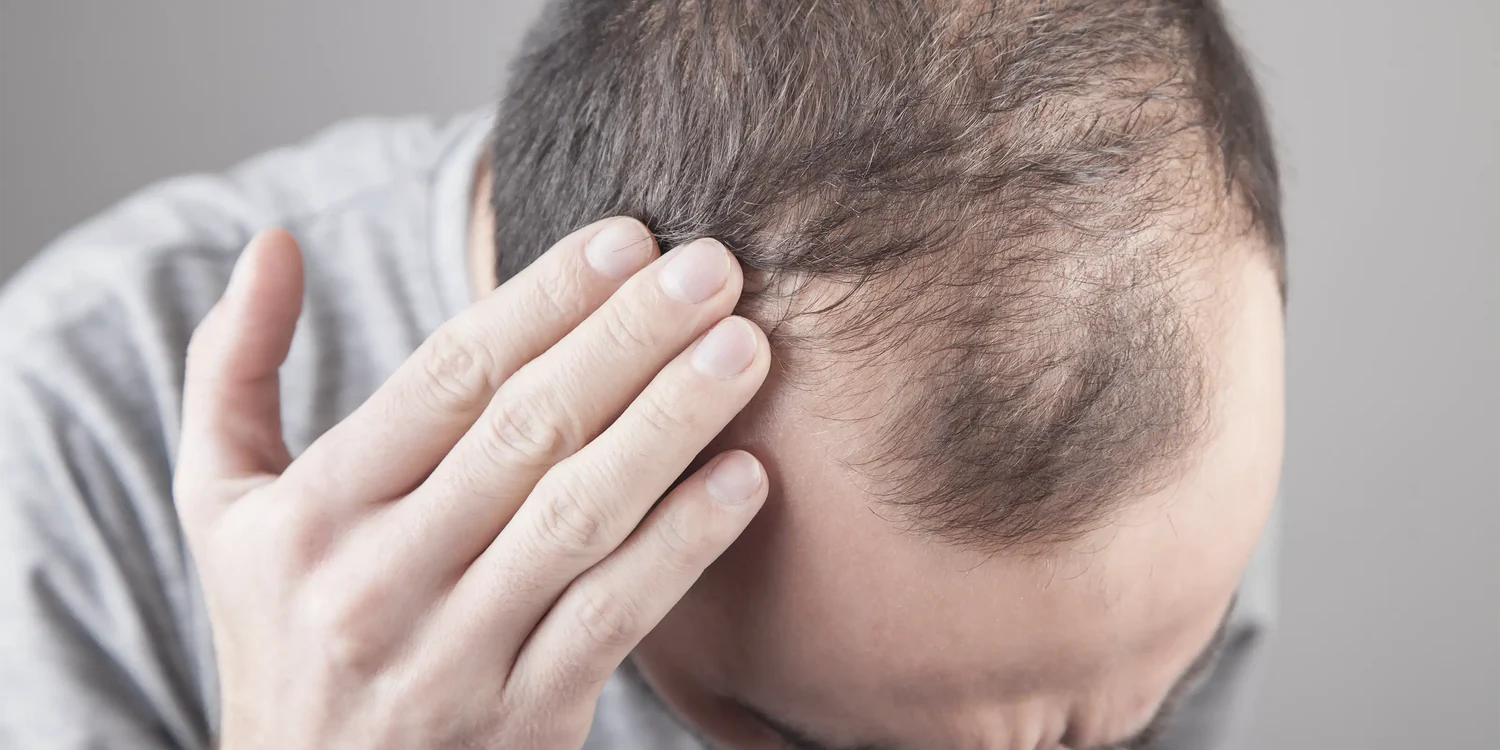
In men, DHT typically causes hair loss in a distinct “M-shaped” pattern:
-
Receding hairline
-
Thinning at the crown
-
Baldness over time
Science Says: Around 95% of male baldness cases are linked to DHT.
DHT & Hair Loss in Women
In women, DHT-related hair loss looks different. It causes:
-
Gradual thinning across the scalp
-
Widening of the hair part
-
Thinner ponytails
-
Rarely full baldness
Note: Women usually have lower testosterone levels, but still produce some DHT, enough to impact sensitive follicles.
Is Everyone Affected by DHT?
Not exactly. Genetics play a big role. Some people inherit more sensitive DHT receptors on their scalp, which makes them more prone to hair loss, even if their DHT levels are normal.
How to Block DHT (Scientifically Proven Options)
Blocking or reducing DHT can slow or stop hair loss in many people. Here’s how:
1. Finasteride (Oral Medication)
Blocks 5-alpha reductase, reducing DHT production.
Result: Slows hair loss and promotes regrowth in many men.
Warning: Only for men. Can cause sexual side effects. Prescription required.
2. Dutasteride (Stronger Oral DHT Blocker)
Blocks both type 1 and type 2 forms of 5-alpha reductase.
Result: More powerful than Finasteride but with stronger side effects.
3. Topical DHT Blockers
-
Ketoconazole shampoo
-
Saw Palmetto lotions
-
Caffeine shampoos
These target DHT on the scalp directly.
4. Natural DHT Blockers (Herbal Options)
Some plant-based ingredients may help reduce DHT effects:
-
Saw Palmetto
-
Pumpkin seed oil
-
Green tea extract (EGCG)
-
Stinging nettle
-
Reishi mushroom
These work best as supplements or topicals, and results vary by person.
Related Read:
- Morning vs Night Hair Care: What Works Best for Healthy Hair?
- Best Daily Hair Care Routine for Healthy, Strong Hair
- What Really Causes Hair Loss? The Science Explained
5. Lifestyle Tips to Lower DHT Naturally
-
Reduce stress (less cortisol = hormonal balance)
-
Avoid high-sugar, high-fat diets
-
Get proper sleep and hydration
-
Exercise regularly to support hormone health
Can Hair Grow Back After DHT Damage?
It depends on the stage of hair loss. If the follicle is still alive but shrunken, DHT blockers and treatments may revive it. But if the follicle is completely inactive (dead), regrowth is unlikely.
Early treatment = better chances of recovery.
Conclusion
DHT is the silent enemy behind most hair loss—especially in men. But the good news is, science has uncovered many ways to block or reduce DHT and protect your hair follicles.
If you suspect your hair loss is hormone-related, consult a dermatologist early. The earlier you act, the better your chances of keeping your hair.
Sources
-
American Academy of Dermatology
-
Mayo Clinic
-
NIH – National Library of Medicine
-
Journal of Clinical Endocrinology & Metabolism
-
Healthline